

The Galapagos Islands are one of the most fascinating parts of the world, but they are also among the most regulated. The islands are governed from mainland Ecuador and their rules change on a regular basis. Always check with your agent for the most up to date rules and fees.
Every yacht coming to the Galapagos must have prior permission (an Autógrafo).
Autógrafos must be applied for via an agent at least 60 days in advance of your arrival (as it normally takes six weeks to process all paperwork). An Autógrafo permits a stay of up to 30 days with the possibility of a 30-day extension. With an Autógrafo yachts may be able to visit up to 5 inhabited ports.
As well as the Autógrafo, a number of other documents and certificates are required in order to visit the Galapagos. For full details about these and the Autógrafo see Documents.
You should also be aware that regulations to prevent bio-contamination are strictly enforced. Yachts arriving with any signs of fouling are likely to be denied entry and required to depart at least 60NM offshore to clean hulls and fittings before attempting re-entry, at which point a re-inspection fee of USD$150 will be charged. A Hull Insepction Certificate and a Fumigation Certificate (approx. cost US$150) should be acquired in your last port prior to departing for Galapagos. Pay careful attention to the latest requirements for what food you can have on board.
Read more about the environmental risk assessment on arrival, permitted food and how to prepare in Biosecurity.
All visiting yachts must be fitted with AIS (transmitter and receiver) and will be required to present an AIS certificate.
Your agent must be kept updated with your ETA as you approach the Galapagos, in order to arrange all the officials.
You must communicate and arrange with your agent which port of entry you wish for first arrival and check-in. The choices are Puerto Baquerizo Moreno (San Cristóbal), Puerto Ayora (Santa Cruz), Baltra (N of Santa Cruz) or Puerto Villamil (Isabela). Yachts arriving should not stop anywhere - but at the agreed Port of Entry. Baltra is mainly used by superyachts as there is fuel there and the airport, however no town and no facilities for cruisers.
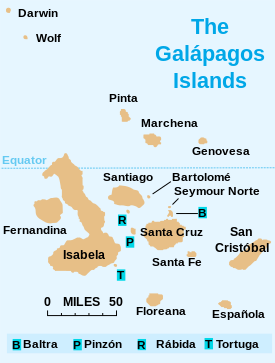
Boats that enter the Galapagos without an Autógrafo are placed under “Arribo Forzoso” (forced stop) and are subject to the decision of the Port Captain as to how long they can stay, or if indeed they are permitted to stop. There are two types of “Arribo Forzoso”:
The Galapagos does not recognize or allow the normal 72-hour breathing space to rest etc. before checking in. They allow 12 hours only. However, in the first 12 hours, you can take on provisions and water.
It is mandatory to use an agent to check in with the port captain for any stay of more than one day. The agent acts as a go-between for your dealings with the port captain and will collect the fees for your entry into the harbor. See Clearance Agents for more details and a list of Galapagos Agents.
Overtime must be paid outside office hours, 08:00-17:00 Monday to Friday, at weekends or during local holidays. The overtime fees are almost double the normal fee. Request that your agent complete clearance during office hours.
You will be boarded by a number of officials either all at once or at different times and usually on the same day as each other - but sometimes not. They will likely all arrive in a large water taxi, so prepare with plenty of fenders and lines, as soon as you arrive, for the vessel to come alongside for unloading. Your agent, or their representative, will come on board with the officials. Officials will likely wear heavy black boots that will mark your deck, so prepare accordingly. Have cool, non-alcoholic drinks ready.
The officials will want you to fill in forms, many asking for the same information. Officials may want to inspect your boat very thoroughly, looking in the bilges, at your security equipment, through the lockers etc. Again, this depends on how motivated the officials are that you have on board, but be prepared and most importantly be patient - your agent will guide you through the procedure. There may be anything from 8-12 officials wanting to board your yacht, including:
See Fees for a breakdown of costs.
On completion of the clearing in the procedure, the agent must give you the original "factura", which is a receipt from the port captain detailing the fees charged. It should not be a photocopy.
If you have an Autógrafo and sail from inhabited port to inhabited port, there are local arrival and departure fees (see documents for a list of inhabited ports and Fees). Most yachts navigate the islands in an anti-clockwise direction.
Isabella and Floreana are by far the quietest and more relaxed islands to visit.
Before you move to another port your agent must request a zarpe from the Port Captain at least 24 hours in advance. The Zarpe from San Cristobal or Isabela will also cover Floreana.
Be sure to check your hull before arriving in the next port as you may be inspected on arrival there as well (for example going from San Cristobal to Santa Cruz).
It should be firmly understood that the Autógrafo only allows the yacht to visit the ports applied for and not any anchorages around them. Once anchored in port, further exploration can be done onshore and for some sites you may require a registered guide to accompany you. In the ports there are several companies offering walking tours and sea excursions.
The movement of vessels between inhabited ports is strictly controlled. Skippers must plan and communicate their sailing movements in advance and submit them to the agent. The authorities are not flexible to change.
It is possible to cruise the National Park onboard your own boat but the fees for doing so are expensive. See Fees for details.
Give your agent 24 hours notice that you want to leave so the appropriate Zarpe can be arranged.
The port captain will issue a domestic Zarpe for the next port. There are fees to move between islands.
It is possible that on arrival in the next island officials will want to inspect your boat again.
Yachts with an Autografo can leave the country from San Cristobal, Santa Cruz or from Isabela.
Give your agent 48 hours notice that you want to leave so the appropriate Zarpe can be arranged.
While Isabela is slightly closer to French Polynesia for clearing out, it's important to note that it has minimal services (no fuel or ATM) and there is no Immigration official. Therefore yachts wishing to clear out of the country from this port must cover the expenses (approx. $150 USD) of sending an immigration official there to stamp the Passports on departure. Your agent can help organize this and it is possible to share this cost between a group of boats.
You will need to meet your agent with all passports and visit Immigration to get them stamped before departure.
The final responsibility for having an exit stamp in your passport lies with you, not the agent.
On departure, several officials will come on board to search the boat and check you are not taking anything illegal away with you (turtles or drugs). They will also check your safety equipment, liferaft etc.
Once you receive your zarpe you will be told to leave immediately.
Last updated: July 2025