
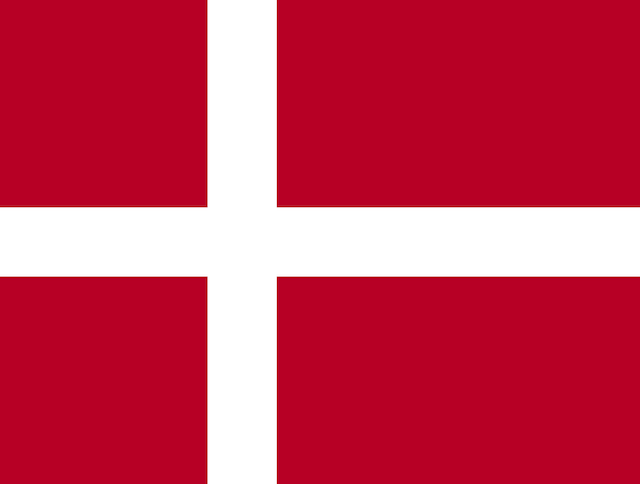
YachtFlags.com provides high quality courtesy flags that are manufactured in durable Knitted Polyester fabric. Knitted so that the fabric itself does not deteriorate in the constant movement that marine flags are usually exposed to, and polyester so that the flag does not weaken in the strong UV-light usually found in the main sailing areas of the world.
YachtFlags.com offers a discount to Noonsite members.
Use the coupon code NOONSITE-5A2B when checking out to get 10% off today.
YachtFlags.com provides high quality courtesy flags that are manufactured in durable Knitted Polyester fabric. Knitted so that the fabric itself does not deteriorate in the constant movement that marine flags are usually exposed to, and polyester so that the flag does not weaken in the strong UV-light usually found in the main sailing areas of the world.
YachtFlags.com offers a discount to Noonsite members.
Use the coupon code NOONSITE-5A2B when checking out to get 10% off today.
YachtFlags.com provides high quality courtesy flags that are manufactured in durable Knitted Polyester fabric. Knitted so that the fabric itself does not deteriorate in the constant movement that marine flags are usually exposed to, and polyester so that the flag does not weaken in the strong UV-light usually found in the main sailing areas of the world.
YachtFlags.com offers a discount to Noonsite members.
Use the coupon code NOONSITE-5A2B when checking out to get 10% off today.

Harbors and Docking:
Yachting facilities are good throughout the country and there are either marinas or fishing harbors with mooring facilities for yachts conveniently situated within a short distance of each other. The majority of harbors have a maximum depth of 2.5m and get very crowded in summer. It is customary to raft up extensively, often several boats deep and catamarans will find getting a berth difficult. The Danish Yachting Association has mooring buoys (marked with DS in black letters) in 23 harbors in Limfjord, the east coast of Jutland, SE coast of Fyn and south coast of Sjaelland. Visiting sailors may not use such buoys.
Contact local harbors when staying during the winter for availability. Be aware that some harbors freeze in the winter. Look for good harbors that an insurance company can consider to be safe throughout the winter. It is necessary to arrange for somebody to look after the boat if left in the water in case there should be storms and flooding.
All military exercise areas are shown on Danish charts. Boats are permitted to pass through when there is no firing practice. Notices to Mariners is posted from the Danish Maritime Authority webpage.
In harbor, it is expected that crews should be quiet after 22:00.
Electricity:
LPG:
Best advice is to carry as much gas as possible! Camping Gaz (butane) is available from chandlers, camping sites, Statoil roadside filling stations, and some ironmongers. Beware of shortages later in the season. Propane is widely available and burns better in cold weather but there may be problems with connectors.
Fuel:
Diesel and sometimes petrol pumps are found in the vicinity of most marinas. For safety reasons, the pumps are usually outside the mooring area. Self-service is the general rule, payment either being to a cashier or, more often, by using a credit card. Low-duty marine diesel is not available to yachts in Denmark. In smaller harbors, it may be necessary to fetch fuel in jerrycans from a garage. Fuel berths nearly always have pump-out facilities.
Liftout and Repairs:
There are boatyards and repairs on several East coast ports, on Bornholm, Funen/Fyn, Langeland, Sjaelland (including Copenhagen) and West coast ports.
The best repair facilities are concentrated in and around Copenhagen
where there are several marinas, the best known of which is Langelinie
close to the center of the capital, although this is generally used by
traditional craft and sail training ships. Also close to Copenhagen is
the marina at Svanemoellen. There are good facilities at Århus and
Ålborg, the latter in Limfjord.
At Skagen and Vejle there are some repair services.
Marine Supplies:
Marine supplies are available in all yachting centers, although the prices are very high.
Provisioning:
Provisioning is excellent throughout Denmark and the quality of food is among the best in the world.
Night Sailing:
A powerful flashlight or searchlight is a useful item of equipment for night sailing in Denmark as very many of the marks are unlit but well equipped with conspicuous reflective tape. Although in summer the nights are very short and, in clear weather, hardly dark at all. It is worth obtaining a Danish "cockpit handbook" type publication showing, in particular, the reflective tape system in use on Cardinal Marks (known sensibly as "Compass Marks" in Denmark).
Waste Disposal:
Nearly all harbors have refuse bins and recycling bins. To dispose of oil, metal and similar wastes it may be necessary to ask at a yacht club or boatyard. If in uninhabited places, carry your waste with you until you reach the harbor. No waste other than fresh fish may be thrown overboard.
Flag Etiquette:
Guests are expected to fly a courtesy flag under the starboard spreader in the same period as the flag.
The flag is taken down at sunset, no later than 2100 and hoisted at sunrise, not earlier than 0800. When leaving the boat, the flag must be taken down.
If you have information for this section, or feedback on businesses used, please let us know at editor@noonsite.com. We also welcome new information about businesses you have used (see Related Businesses).

As a free member or guest you are restricted to 3 formalities per month. You have viewed 0 formalities this month. Please login, register or upgrade your membership to view more.
Note: you can still view formalities you have already viewed this month without counting towards your monthly limit.