
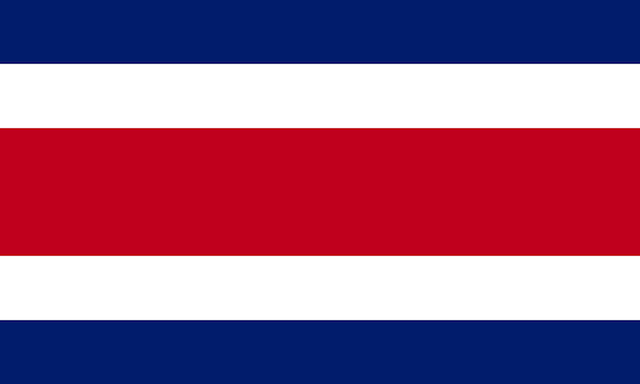
YachtFlags.com provides high quality courtesy flags that are manufactured in durable Knitted Polyester fabric. Knitted so that the fabric itself does not deteriorate in the constant movement that marine flags are usually exposed to, and polyester so that the flag does not weaken in the strong UV-light usually found in the main sailing areas of the world.
YachtFlags.com offers a discount to Noonsite members.
Use the coupon code NOONSITE-5A2B when checking out to get 10% off today.
YachtFlags.com provides high quality courtesy flags that are manufactured in durable Knitted Polyester fabric. Knitted so that the fabric itself does not deteriorate in the constant movement that marine flags are usually exposed to, and polyester so that the flag does not weaken in the strong UV-light usually found in the main sailing areas of the world.
YachtFlags.com offers a discount to Noonsite members.
Use the coupon code NOONSITE-5A2B when checking out to get 10% off today.
YachtFlags.com provides high quality courtesy flags that are manufactured in durable Knitted Polyester fabric. Knitted so that the fabric itself does not deteriorate in the constant movement that marine flags are usually exposed to, and polyester so that the flag does not weaken in the strong UV-light usually found in the main sailing areas of the world.
YachtFlags.com offers a discount to Noonsite members.
Use the coupon code NOONSITE-5A2B when checking out to get 10% off today.

Costa Rica offers some of the top healthcare services in all of Latin America. While San Jose's medical facilities often provide adequate treatment, other locations may offer more limited services. Basic medical supplies might not be available in remote areas. Ambulance services are widely available but may lack emergency equipment. Most hospitals and medical professionals require cash payment prior to service or admission. Many doctors, especially in private practice, speak English and have received training abroad.
There are three large, private hospitals that are affordable and high quality in and around the capital of the country, San Jose: CIMA Hospital in Escazu, Clinica Biblica in San Jose, and Hospital La Catolica in San Jose-Guadalupe.
Dentists in Costa Rica charge far less than dentists anyplace else while being just as competent and knowledgeable.
Vaccine-Preventable Diseases:
Make sure you are up-to-date on all routine vaccines before your trip.
Hepatitis A and B as well as Typhoid vaccinations are advised.
In Limón province, a malaria outbreak has been reported. Additionally, the province of Alajuela has malaria transmission.
Visitors are advised by the CDC to take a prescription malaria preventative before visiting specific Costa Rican regions.
Yellow Fever vaccination is required if coming from certain countries in South America or Africa with a risk of YF virus transmission. You can travel to Costa Rica ten days after the shot.
Visit the CDC website and the Costa Rican Ministry of Health website for more details.
Food and Water Concerns:
The tap water in Costa Rica is safe to drink. The country has a well-developed water treatment infrastructure, and the water quality is closely monitored by the government. However, bottled water is recommended especially in rural areas around the coast.
Mosquito-borne Diseases:
There is a risk of mosquito-borne diseases such as Dengue fever and Chikungunya virus in Costa Rica. A high number of dengue cases have been reported in Huetar Caribe region followed by Central Pacific and Central North, while cases of Zika virus were also recorded in June of 2023.
Prevention:
Other Diseases:
Rabid dogs are commonly found in Costa Rica. Rabies vaccination is advised.
Rabies treatment is available if you are bitten or scratched by a dog or other mammal while in Costa Rica.
Prescription Drugs:
Most prescription and over-the-counter medications are available. Bring a supply of your medications and carry prescription medication in original packaging along with your doctor’s prescription. To make sure the medication is acceptable in Costa Rica, check with the country's Ministry of Health.
Emergency Numbers:
See Emergencies.
Dial 911 for immediate assistance.
Last updated: July 2023
If you have information for this section, or feedback on businesses used, please let us know at editor@noonsite.com. We also welcome new information about businesses you have used (see Related Businesses).

As a free member or guest you are restricted to 3 formalities per month. You have viewed 0 formalities this month. Please login, register or upgrade your membership to view more.
Note: you can still view formalities you have already viewed this month without counting towards your monthly limit.