

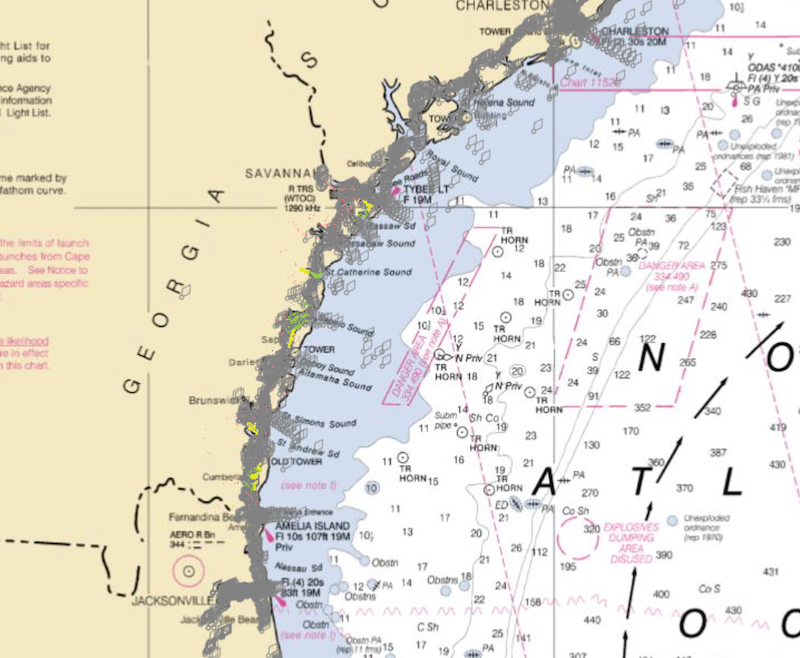
- Coastal Georgia, USA.
The state of Georgia on the east coast of the USA has more than 160kms of coastline and is a popular destination for cruisers heading north from Florida. The Georgia portion of the Atlantic Intracoastal Waterway (AICW) has many anchorages and the coastal marshlands are considered a vital natural resource for the state’s economy.
Effective from January 1, 2020, the Georgia Department of Natural Resources has implemented new regulations for overnight anchoring and waste disposal from vessels along the state’s coastline.
Waste Disposal:
To protect the estuarine marshes and shellfish areas, vessels cannot discharge any waste directly into Georgia’s estuarine waters, regardless of whether the waste has been treated.
Waste must be discharged at one of 19 pump-out stations along Georgia’s coast. Additionally, marine sanitation devices must be secured in a manner such that waste can only be discharged at a pump-out station.
Overnight Anchoring:
While a permit is not necessary for overnight anchoring, there are now strict areas where you cannot anchor. These are:
- within 300 meters (1,000 ft)* of marked shellfish beds, whether commercial leases or public-picking areas.
- within 300 meters (1,000 ft)* of any structure, such as public and private docks, wharfs, bridges, piers and pilings, except in areas near marinas.
* Note: the exclusion zone applies to the vessel’s swing circle.
However “marina zones,” have been created, which allow boaters to anchor as close as 90 meters (300 ft) to marinas or facilities that provide fuel, dinghy access, provisions, vessel maintenance or other services, regardless of whether other structures exist nearby. Boaters may anchor overnight within these marina zones.
Mr Doug Haymans, director of the Coastal Resources Division (CRD) of the Georgia Department of Natural Resources (DNR) said the law change and associated administrative order was not intended to restrict or impact boaters engaged in fishing and other recreational activities.
“The intent of the change and enforcement will be to prohibit overnight anchoring in locations that could degrade shellfish production, cause navigation hazards, or create conflicts between waterfront homeowners and the boating public,” he said.
Non-Compliance:
Noonsite has been advised that non-compliance with the new laws can result in a misdemeanor criminal offense punishable with up to 12 months in jail.
Cruisers who have crossed the Atlantic Ocean and intend sailing up the east coast of the USA, should ensure they are aware of the restrictions and requirements to avoid any problems.
Related content:
Related links:
- New coastal boating laws take effect in Georgia – January 2020
- Georgia Department of Natural Resources Administrative Order – January 2020
- Georgia Department of Natural Resources Coastal Anchoring and Discharge Maps
………………………………………………………………………………………………………………………………………
Noonsite has not independently verified this information.