

Since April 2023, NOAA has been monitoring a steady rise in ocean temperatures, which is resulting in unprecedented heat stress conditions in the Caribbean basin, including waters surrounding Florida and the Gulf of Mexico.
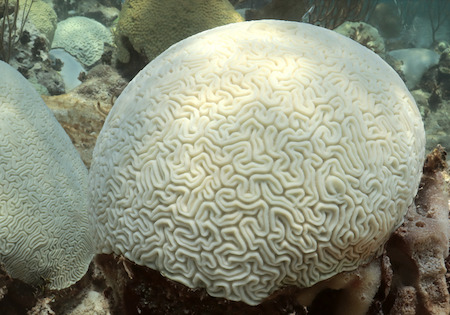
In August 2023, NOAA scientists provided a briefing on how these record-breaking warm ocean temperatures have stressed, bleached, and in some cases, killed corals within the 3,800 square miles of the Florida Keys National Marine Sanctuary.
Coral reefs are often referred to as the “rainforests of the sea,” due to their incredible biodiversity and ecological importance. They provide vital benefits as part of marine ecosystems by sustaining habitats for marine life, buffering the harmful impacts of storms on coastal communities, and supporting local economies through tourism and fishing.
Bleaching event underway
According to the briefing, a large-scale heat stress and coral bleaching event is underway, impacting two ocean basins and multiple countries.
Five countries in the Eastern Tropical Pacific have confirmed coral bleaching, including Mexico, El Salvador, Costa Rica, Panama, and Columbia. Seven countries/territories/states in the Atlantic have confirmed bleaching as well, including Florida, Puerto Rico, the U.S. Virgin Islands, Mexico (both sides of the Yucatan), Panama, Belize, and Cuba.
Throughout the Caribbean and Atlantic, sea surface temperatures are as high or higher than ever before in satellite records, and heat stress has developed five to six weeks earlier than ever seen in the record.
Essentially, corals around Florida are experiencing extreme levels of heat stress that have never been recorded before. All of the Florida Keys are at Alert Level 2 for bleaching conditions, which means severe, widespread bleaching and significant mortality are likely.
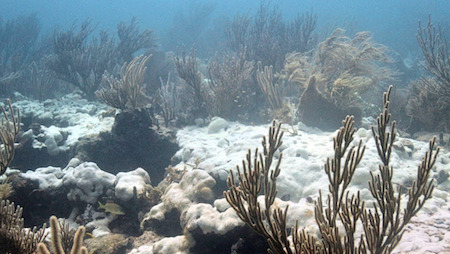
Some sites have already been exposed to two times greater the amount of heat stress than when mortality is expected to begin, and so far, the most extreme heat stress is in the lower and middle Florida Keys.
NOAA’s current modeled Outlook predicts that a Caribbean-wide mass bleaching event may begin in a matter of days to weeks, and Alert Level 2 conditions are predicted for the majority of Caribbean coral reef sites by the end of September.
NOAA scientists and partners are employing various methods to restore Florida’s Coral Reef, but it’s a race against time. They are assessing how different genotypes (genetic individuals) of coral tolerate different environmental conditions; developing ways to naturally prepare corals for stress in the wild; and are working to automate certain processes to increase efficiency and decrease costs.
In July, ocean temperatures near Florida crossed into the triple digits. A sensor in Manatee Bay near Everglades National Park recorded 101.1 degrees Fahrenheit at 6 p.m. after a morning low of 91 degrees. For comparison, the average hot tub temperature is 100 to 102 degrees. Other readings included a buoy near Johnson Key that reached 98.4 degrees while others in the area reached or surpassed 95 degrees during the day. In these cases, the water temperatures were even higher than air temperatures.
Marine heatwaves can last for weeks, months, or years, and by definition, are usually defined as any time the ocean temperature is above the 90th percentile for a specific length of time, which can vary depending on whether you are looking at daily or monthly data. Observations and measurements of marine heatwaves are made by the National Weather Service’s National Data Buoy Center, which gathers data from 1,300 weather observing stations.
Additionally, global ocean surface temperatures are monitored daily using a blend of geostationary and polar-orbiting satellite measurements.
In addition to the tropics, other isolated marine heatwave conditions have been detected off the Northeastern U.S. coast, along the path of the Gulf Stream. NOAA also has been monitoring a large marine heatwave in the Northeast Pacific, in the Gulf of Alaska, that has been sitting offshore since late 2022.
To read the full story from NOAA:
………………………………
Related News:
- What’s Killing Florida’s Coral Reefs (Washington Post)
- Florida in Race to Rescue Coral Bleached by Record Ocean Heat (The Guardian)
………………………………
Related Links:
- Marine Heat Waves in US Waters (NOAA)
- Florida Keys National Marine Sanctuary
- Florida Department of Environmental Protection – BleachWatch
………………………………
Find out all news, reports, links and comments posted on Noonsite, plus cruising information from around the world, by subscribing to our FREE monthly newsletter. Go to https://www.noonsite.com/newsletter/.