

Above Normal Atlantic Hurricane Season
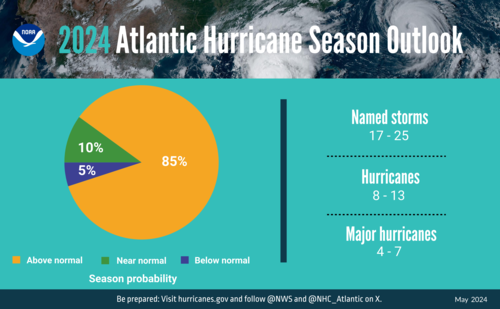
NOAA’s outlook for the 2024 Atlantic hurricane season, which spans from June 1 to November 30, predicts an 85% chance of an above-normal season, a 10% chance of a near-normal season and a 5% chance of a below-normal season.
NOAA is forecasting a range of 17 to 25 total named storms (winds of 39 mph or higher). Of those, 8 to 13 are forecast to become hurricanes (winds of 74 mph or higher), including 4 to 7 major hurricanes (category 3, 4 or 5; with winds of 111 mph or higher). Forecasters have a 70% confidence in these ranges.
La Nina conducive to Atlantic hurricane activity
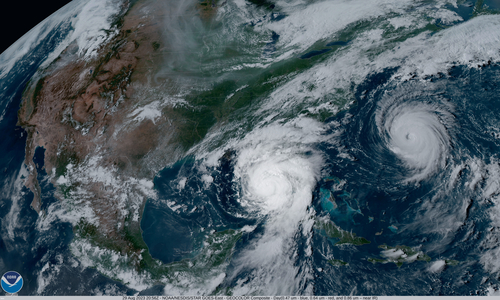
The upcoming Atlantic hurricane season is expected to have above-normal activity due to a confluence of factors, including near-record warm ocean temperatures in the Atlantic Ocean, development of La Nina conditions in the Pacific, reduced Atlantic trade winds and less wind shear, all of which tend to favor tropical storm formation.
As one of the strongest El Ninos ever observed nears its end, NOAA scientists predict a quick transition to La Nina conditions, which are conducive to Atlantic hurricane activity because La Nina tends to lessen wind shear in the tropics. At the same time, abundant oceanic heat content in the tropical Atlantic Ocean and Caribbean Sea creates more energy to fuel storm development.
This hurricane season also features the potential for an above-normal west African monsoon, which can produce African easterly waves that see some of the strongest and longer-lived Atlantic storms.
Finally, light trade winds allow hurricanes to grow in strength without the disruption of strong wind shear, and also minimize ocean cooling.
Human-caused climate change is warming our ocean globally and in the Atlantic basin, and melting ice on land, leading to sea level rise, which increases the risk of storm surge. Sea level rise represents a clear human influence on the damage potential from a given hurricane.
Below Normal 2024 Central Pacific Hurricane Season
The 2024 central Pacific hurricane season outlook from forecasters at NOAA’s Central Pacific Hurricane Center and NOAA’s Climate Prediction Center, calls for 1–4 tropical cyclones across the central Pacific Hurricane region. A near-normal season has 4 or 5 tropical cyclones, which include tropical depressions, tropical storms and hurricanes.
Overall, there is a 50% chance of below-normal tropical cyclone activity. The outlook also indicates a 30% chance of a near-normal season and 20% for an above-normal hurricane season across the central Pacific hurricane region. The central Pacific hurricane region is located north of the equator between 140°W and the International Date Line.
“Hurricane season in the central Pacific region is likely to be below average this year,” said Matthew Rosencrans, lead seasonal hurricane forecaster at NOAA’s Climate Prediction Center, a division of NOAA’s National Weather Service (NWS). “A key factor influencing our forecast is the predicted arrival of La Nina this summer, which typically contributes to less tropical cyclone activity across the central Pacific Ocean basin.”
As one of the strongest observed El Ninos nears its end, NOAA scientists predict a quick transition to La Nina conditions. La Nina typically increases wind shear in the central Pacific region, making it harder for storms to develop. Forecasters look at a combination of atmospheric and oceanic conditions, climate patterns and climate models to develop the outlook.
………………………………
Related News:
- Atlantic Weather 2024: Scientists Predict Very Active Hurricane Season (Noonsite April 2024)
- Colorado State University Hurricane Season Forecast 2024
- Yale Climate Connections Predicts Extremely Active 2024 Atlantic Hurricane Season
- Accuweather experts warn of explosive 2024 Hurricane Season
………………………………
Related Links:
- Noonsite Cruising Resources: Weather
- Colorado State University Seasonal Hurricane Forecasting
- Yale Climate Connections
- Accuweather
- NOAA Central Pacific Hurricane Center
- NOAA Climate Prediction Centre
………………………………
Noonsite has not independently verified this information.
………………………………
Find out all news, reports, links and comments posted on Noonsite, plus cruising information from around the world, by subscribing to our FREE monthly newsletter. Go to https://www.noonsite.com/newsletter/.