

1. Overview:
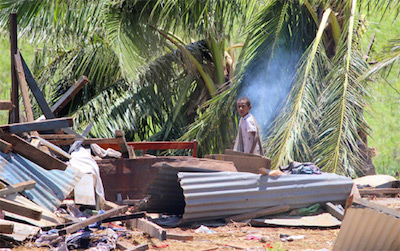
a). Each Nation has its own National Disaster Management Organisation (NDMO), National Emergency Management Organisation (NEMO) or equivalent. These organisations coordinate efforts during the four phases of a disaster:
- Mitigation,
- Preparedness,
- Response; and
- Recovery.
b). These organisations are supported by both National and International Government and Non-Government Organisations (NGOs). Many of these have worked together for years.
c). The commonly accepted standard is “The Sphere Handbook.Humanitarian Charter and Minimum Standards in Humanitarian Response.”
2. Cruiser Preparedness:
Ask yourself:
a). “In the event of a disaster in my area, am I ready and able to look after myself, my vessel and my crew without becoming an extra burden on local resources
b). “Is there a cruising community, club or association that could support local organisations with Disaster Mitigation and/or Preparedness?” Cruisers possess a wide range of life skills that can support community projects.
3. Cruiser Response and Recovery:
The Golden Rule: “Do not become part of the Disaster.”
a). If you are in the affected area and are able to Respond (or later to assist with Recovery efforts) strive to do so as part of the National coordinated relief efforts.(see 2.b above.).
b). If you are not in the affected area but are considering sailing to assist, ask yourself:
“If there was no disaster, would I normally sail there, with this amount of cargo, at this time of year?”(cyclone/hurricane season). See “Golden Rule” above.
c). If you are considering bringing or sending aid, ask yourself:
- “Are aid items available for purchase in country? If so, am I better spending my money there to assist economic recovery?”
- “What aid is needed and appropriate?”rather than “what aid do I want to give?”
- “What will happen to any aid supplies that I bring or send? Who will pay for their import clearance, storage and distribution?” Biosecurity and Revenue and Customs laws still apply and many host states will now only accept aid that is specifically requested and approved by them.
- “Should I send aid to the family I met when I was last cruising there?”
Many cruisers understandably want to assist a family they may have met previously. With the above points (1 – 4 ) in mind, also consider the social consequences for that family if they receive preferential treatment over their neighbours.
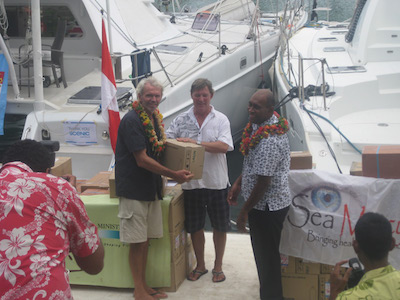
Attached below is an article from The Australian Red Cross on unsolicited aid which relates to Tropical Cyclone Winston which affected Fiji in 2016.
4. Conclusion
There is no single right way to respond. Every disaster is different, as are every cruiser’s circumstances. I hope the above points provide some food for thought and promote ideas and discussion within the cruising community.
Jonathan Robinson
Sea Mercy (Fiji)
………………………………………………………………………………………………………………………………………
About the Author
Jonathan Robinson and his wife Donna have been cruising full time since 2014. They are Sea Mercy volunteers and over the last six years Jonathan has coordinated that organisation’s responses to Cyclones Pam and Harold (Vanuatu) and Winston, Yasa and Ana (Fiji)and COVID-19 (Fiji).
For more information visit:
Sea Mercy Facebook page
Sea Mercy website
………………………………………………………………………………………………………………………………………
Related Links:
Australian Red Cross: The shirt off your back
………………………………………………………………………………………………………………………………………
The opinions expressed in this article are the author’s own and do not reflect the view of Noonsite.com or World Cruising Club.