

Source: Panama Canal Authority
The Panama Canal is closely monitoring the development of weather events affecting water availability in the canal watershed, which according to forecasts, could worsen with the arrival of the El Niño phenomenon.
In response, the canal authority will proceed with water saving measures during the rainy months to aid water recovery throughout the surrounding lakes and, thus, guarantee resources for human consumption without affecting transits. Unfortunately, current estimates indicate that the economic impact is unavoidable.
The climatic emergency decreed by the Panamanian National Government reinforces what the Panama Canal has been stating regarding the reality of a shortage of fresh water.
“This is an issue that the Panama Canal has been warning and preparing for; however, we could not have predicted exactly when the water shortage would occur to the degree that we are experiencing now,” said Canal Administrator Ricaurte Vásquez Morales.
The last period of intense drought in the Canal took place in 2019 – 2020. These cycles, the administrator added, have historically happened once every five years. “Still, what we are experiencing now is that these events are being reduced to once every three years,” he cautioned.
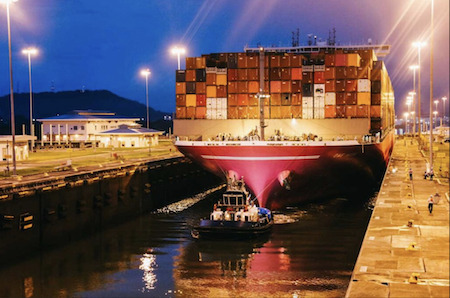
Water-saving measures
The Panama Canal has implemented water-saving measures to maintain maximum capacity in our reservoirs during the May through December rainy season and to cover the projected water demand during the dry season, which typically begins in January and lasts until April. The current conditions, however, are creating an unprecedented drought, and thus far has produced the driest year on record since 1950.
Consequently, climate is progressively lowering the canal’s reservoir levels and forcing the Panama Canal to periodically manage water utilization in a sustainable manner to maintain acceptable and competitive draft levels.
What is the Canal doing?
Since January 3, the canal has implemented a series of water-saving measures within its operations which will guarantee that ample water resources will be available to supply the population and offer a reliable and competitive service to customers throughout the dry season.
“We have implemented procedures such as cross-fillings, cross-spilling and short chamber lockages in the Panama locks, and increased the use of water-saving basins in the Neopanamax locks,” explained Vásquez Morales.
“Additionally, we have minimized direction changes between northbound and southbound transits in Gatun locks, maximized tandem lockages and have suspended hydroelectric power generation among other controls.”
Additionally, Panama Canal specialists with the United States Corps of Engineers have evaluated alternatives as part of a study for the Water Sustainability System, studying different scenarios and growth projects to find long-term solutions that will allow the canal to guarantee this resource for the next 50 years.
Droughts are expected to affect water availability in Panama and globally. Hence, the canal is implementing operational and planning procedures, innovative technologies, and long-term investments to mitigate its impact and safeguard its operation.
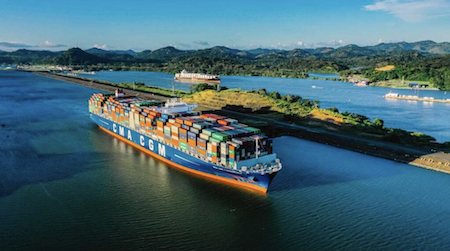
Impacts for Canal users
Due to the extended drought, in advance, the Panama Canal informed its customers that based on the current and projected levels of its water reservoirs, vessels transiting the Neopanamax locks are allowed maximum drafts of up to 44.5 feet.
A limited number of ships have had to lower their draft levels to comply; notwithstanding, LNG carriers transiting through the all-water route typically report drafts of up to 37 feet, hence these temporary adjustments have had little impact on them and cero impact on ships transiting through the Panamax locks.
It has also helped that the drought coincided with the Canal’s low demand season, seemingly reducing impact on customers. Nevertheless, open communication channels with customers and permanent analyses are being conducted to validate if this decrease is due to seasonality, or if there are other causes for current market behavior.
Note: the restrictions mentioned in this item relate to merchant vessels and will not affect yachts. However as yachts usually transit in tandem with a merchant vessel anyone planning on transiting the Panama Canal should be aware that the Canal authority is preparing for different climate change scenarios.
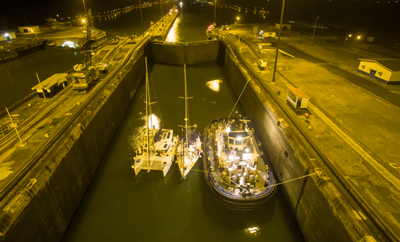
About the Panama Canal
The Panama Canal Authority is an autonomous legal entity of the Republic of Panama in charge of the operation, administration, management, preservation, maintenance, and modernization of the Panama Canal, as well as its activities and related services, so that the Canal may operate in a safe, continuous, efficient manner.
For more information, please refer to the Panama Canal website or follow on Twitter @thepanamacanal.
Noonsite’s Panama Canal Transit Guide
………………………………
Related News:
………………………………
Noonsite has not independently verified this information.
………………………………
Find out all news, reports, links and comments posted on Noonsite, plus cruising information from around the world, by subscribing to our FREE monthly newsletter. Go to https://www.noonsite.com/newsletter/.